Thursday, May 2, 2019

A Suggestive Juxtaposition

   I thought today I should present an interesting juxtaposition.  We  begin with a droll passage from The Scarlet Letter, in which Pearl answers the officials who are considering taking her away from her  mother, Hester Prynne. It is followed by the illustration* of an emotive scene. The image underscores the character of the connection between Hester and the Rev. Mr. Dimmesdale.  Followers of the novel--particularly those who have considered my Afterward to the International Authors edition of The Scarlet Letter--should find rewards, of one kind or another, in the comparison of these two elements.
   “Pearl,” said he, with great solemnity, “thou must take heed to instruction, that so, in due season, thou mayest wear in thy bosom the pearl of great price. Canst thou tell me, my child, who made thee?”
   Now Pearl knew well enough who made her; for Hester Prynne, the daughter of a pious home, very soon after her talk with the child about her Heavenly Father, had begun to inform her of those truths which the human spirit, at whatever stage of immaturity, imbibes with such eager interest. Pearl, therefore, so large were the attainments of her three years’ lifetime, could have borne a fair examination in the New England Primer, or the first column of the Westminster Catechism, although unacquainted with the outward form of either of those celebrated works. But that perversity, which all children have more or less of, and of which little Pearl had a tenfold portion, now, at the most inopportune moment, took thorough possession of her, and closed her lips, or impelled her to speak words amiss. After putting her finger in her mouth, with many ungracious refusals to answer good Mr. Wilson’s question, the child finally announced that she had not been made at all, but had been plucked by her mother off the bush of wild roses, that grew by the prison-door.


To purchase the International Authors edition of The Scarlet Letter,  please click the image of the cover:


* The illustration is by Mary Hallock Foote, engraved by A. V. S. Anthony.  It is taken from an  illustrated edition published in  Boston by James R. Osgood, 1878.  Source.

Tuesday, April 30, 2019

Dyna-Soar


Click HERE for the action.

Monday, April 29, 2019

A Wellsian Digression


We should be known to them however, as strange, meteoric creatures, wont to fall catastrophically dead out of the mysterious blackness of their watery sky. And not only we ourselves, but our ships, our metals, our appliances, would come raining down out of the night. Sometimes sinking things would smite down and crush them, as if it were the judgment of some unseen power above, and sometimes would come things of utmost rarity or utility, or shapes of inspiring suggestion. One can understand, perhaps, something of their behavior at the descent of a living man, if one thinks what a barbaric people might do, to whom an enhaloed, shining creature came suddenly out of the sky.
                                          --H.G. Wells, Into the Abyss

Saturday, April 27, 2019

Michael Brennan in Venice


Will you be in Venice next Friday?  If so, be sure to visit an opening featuring the work of three artists (including Michael Brennan).

The exhibition can be found at the Chiesa Sant'Elena, next to the Biennale giardini site.  There'll be a second opening/event on 6/13 at 6:00 pm.


Please click HERE to learn more about Michael Brennan.

Thursday, April 25, 2019

Sunday, April 21, 2019

Saturday, April 20, 2019

Methuselah Star HD 140283


"The star could be as old as 14.5 billion years (plus or minus 0.8 billion years), which at first glance would make it older than the universe's calculated age of about 13.8 billion years, an obvious dilemma."

Please click HERE for the story.

Thursday, April 18, 2019

Wednesday, April 17, 2019

Michael Butterworth's My Servant the Wind, backchannel note

I've received a note by Abel Diaz to Michael Butterworth concerning the latter's new book, My Servant the Wind.
12 April 2019

Dear Michael,

Last night, I finished reading My Servant the Wind.  I don’t know why I thought it would be a straight-up science fiction novel, but I was not prepared for how experimental it was—a genre unto its own: Meta-temporal-epistolary-apocalypse fiction.  I’ve never encountered its like!

It was quite disorienting.  I don’t think I truly found my footing until the funny but deeply unsettling routine in entry “May 30th 2030” that ends with the warped exclamation: “I’ll goddamn go to bed with your bones!”

Another hilarious and twisted routine of this nature occurred later on page 48 with the fat woman protecting only her hat while the rest of her is pelted with stones and metal and such.  (There are several other routines I enjoyed immensely, but this letter would quickly become a catalog if I listed them all.)

These routines, while belonging to the same genus of those by Burroughs, are definitely their own species.  For one thing, they are faster and leaner.  I guess the word “condensed” that you used several times when describing the techniques of Ballard would be a better way of describing it.  Some of them are so concise and funny that they could be successfully delivered by a talented stand-up comedian.  And so I strongly agree with you when you said in your afterword that you were never so in thrall to your inspirations that you could not form your own distinct style.

Discussing a book like this (are there any books like this?), is really daunting and intimidating for me.  There are huge, HUGE gaps in my knowledge of New Wave and Sci-Fi and every genre in-between.  I worry that I missed or misunderstood some of what was intended in MSTW -- even with the benefit of your very informative afterword.  Couple that with my decidedly un-academic mind, and I’m sure my thoughts are going to sound shallow at best.  But I still want to share with you what I liked most about your novel.

In addition to the many entertaining stories scattered throughout the diary entries (the King comes to mind, the many lively soldier sketches as well), there are two exceptional tales that were such a joy to read that they stand as my favorite parts of this book.  The first is “April 9th 1971”; the story about Ron Fathaway and his Adventure Hut.  Not only were the descriptions of this hut super cool and evocative, but I grew damn giddy as Hob Leg recounted, “We were billeted in a trench…”  The story within a story that follows is so fun and enthralling.  The betrayal by those bastard Huns is so vividly portrayed and described.  The atomic blast at the end is so surreal and weird.  I just really loved this whole entry and I think it was a blast of inspiration!

The second is the entry “August 2nd, 1971.”  This tale of the narrator and his man Scrat reconnoitering that vast plateau was suggestive of old-timey adventure tales in all the best ways.  You revealed that the inspiration for this piece was Edgar Allan Poe, but if so then this is further proof of your ability to take your favorite authors as starting points, then march deep into new territory to stake for your own.  The sudden interjection of that one horrific image—the half eaten baby face donor kebab—really packed a punch.  A few posters of that scene strategically placed around the city of Manchester would surely convert the masses to veganism!  Also, the phantom advertisements were a wild and well executed idea.  I have no reason to think you like Jack Vance, but it reminded me of a Dying Earth moment (which I love and which is intended as a good comparison).

The most powerful moment in the whole novel, however, was a short paragraph found on page 151.  It begins, “My lonesomeness is returning…” and ends, “I will miss him while I face whatever I have to.”  I don’t know if this passage was intended metaphorically or as a riff on something else entirely or as pure parody, but it doesn’t matter to me.  I took it straight, with no hidden meanings, and to me it was the most poignant, impactful passage of all.  It evoked a sense of sorrow and grief that many other moments in the novel approached, but never achieved with quite this intensity.

There is one final passage I feel deserves a special mention.  It can be found on page 142 and it is presented as the words of a friend about how they found a cold newt on a trail and warmed it up with their hands.  I found this moment so touching and endearing that I sat with it for a while, wondering if this was a true story and who had said it to you.  The very last sentence is the one that especially resonates with me: “We had a good ‘encounter,’ and this sort of thing is more in keeping with who I am, what I like to do, and what I like to think about.”  I couldn’t agree more.  It really is a lovely moment in the book.  And it’s one of those descriptions that are vivid and meaningful enough to become an actual memory in the reader’s head.

Well, that’s all for now.  I had a great time reading your novel.  It packed a hell of a lot into a small package.  It had its challenging moments, I won’t lie to you, but it was damn good and it was significant and I’m glad I read it.  I believe the passages I noted above will stay with me for a very long time.  I might even have to build my own Adventure Hut now!

Next up, I’m going to read your new collection of short stories.  I can’t wait to see what gems I’m going to find.

Sincerely,
Abel Diaz
To view the Amazon description of My Servant the Wind, please click the cover image:

Tuesday, April 16, 2019

Monday, April 15, 2019

Saturday, April 13, 2019

Creation of the World, revised review

I was browsing on Amazon the other day, and I noticed that L. Sterns Newburg has revised his review of the International Authors translation of Torquato Tasso's Il mondo creato (Creation of the World).

The review, which contains some encouraging remarks, follows:

Il Creato Mundo in English - Amazing

Genio: Come stai, Torquato?
Tasso: Ben sai come si può stare in una prigione, e dentro ai guai fino al collo.


An impressive piece of scholarship, and a valuable practical document for those interested in the great Italian poet, Torquato Tasso. This is a translation of Tasso's Il Creato Mundo, and the translators have been faithful - I want to say "lovingly faithful" - to the spirit and the words of the original. Tasso's original is in some ways an eccentric performance, so this translation presented numerous technical challenges, most of which have been surmounted.

The most difficult part of Tasso to recreate in English is the music of the original Italian. Any translation from a Romance language to English that somehow recreates such music engaged in a species of legerdemain, and inevitably, it results in subtle departures from sense of the original. The translators did not attempt to recreate Tasso's music.

Tasso cannot, perhaps, really speak to us in English, but the able translators have given us something far superior to a mere crib. Bravissimo!

Tasso's reputation in English-speaking countries has mutated over the years. Tasso influenced not only Milton, but Edmund Spenser and Samuel Daniel. He was at one point one of the luminaries of world literature, and after Dante, people tended to discuss Tasso and Ariosto. Something happened in the 19th Century, I gather, and their reputation outside Italia declined. Also, the later work of Tasso is somewhat problematic because he seemed desperate to conform to religious requirements as seen according to the lights of the Counter-Reformation. Alas.

His lyrics, his play Aminta, and Jerusalem Liberated are all very important, but the legend of Tasso as time went on exerted as much influence as the man's work. Leopardi wrote a fictional dialogue between Tasso and his "familiar spirit," and Goethe wrote a famous play. There are other uses of his personal history-as-mythology. It's almost the way Chatterton's life gets used.

This translation could help in a revaluation and understanding of this significant poet, something that is overdue.

To view the book, please click the cover image:

Friday, April 12, 2019

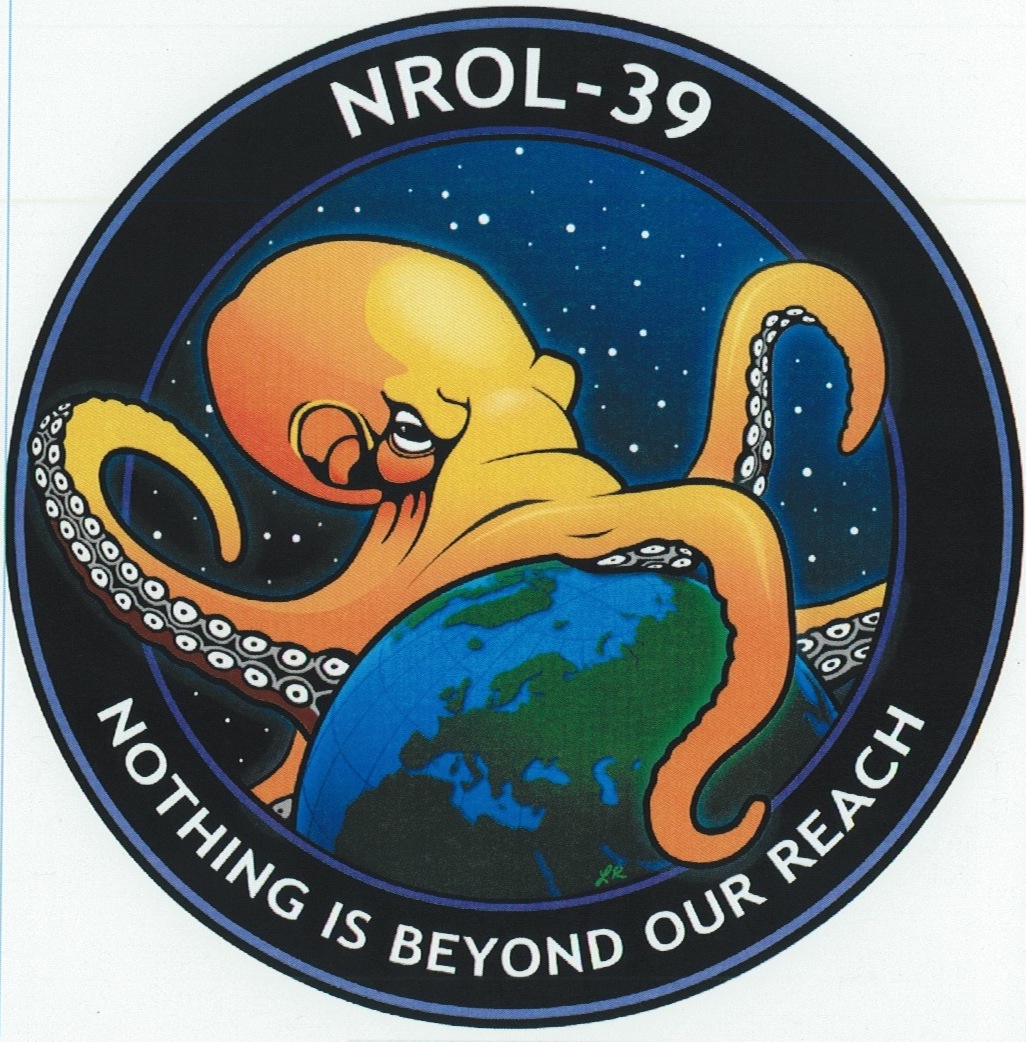
"Ph'nglui mglw'nafh Cthulhu R'lyeh wgah'nagl fhtagn."


A rather grotesque--even juvenile-- logo.  A National Reconnaissance Office spokesperson explained:
NROL-39 is represented by the octopus, a versatile, adaptable, and highly intelligent creature. Emblematically, enemies of the United States can be reached no matter where they choose to hide. 'Nothing is beyond our reach' defines this mission and the value it brings to our nation and the warfighters it supports, who serve valiantly all over the globe, protecting our nation.
I think I prefer a B-24 with a scantily clad girl on the nose, but anyway...

Please click HERE for the story.

Thursday, April 11, 2019

Terrance Lindall named President of the Williamsburg Circle of International Arts & Letters


I am happy to announce that Terrance Lindall has been named President of the Williamsburg Circle of International Arts and Letters.

Please click HERE for the homepage of the Williamsburg Circle of International Arts and Letters.

Please click HERE for the biographies of the membership.