
Saturday, February 25, 2023


Thursday, February 23, 2023
Wednesday, February 22, 2023
Wittgenstein and Locke--a very brief note
Wittgenstein can help us clarify Locke's problems with language in the Essay, but can Wittgenstein's methods help us to understand the Two Treatises or The Letter on Toleration?
In the First Treatise, Locke is simply giving Robert Filmer a much-needed Bible lesson. In the Second Treatise, Locke presents a picture of human nature and human history, offering suggestions on how we might build institutions to protect that world view and the people in it. It's all politics. With a nod to political science, in the classroom we must unpack the Second Treatise wearing the hats of anthropologists and historians.
Methodologically--perhaps--Wittgenstein shows that Locke's remarks and recommendations in the Second Treatise are not matters for philosophers to argue over but are rather the stuff of political debate: matters that are introduced in grammar schools and settled in Parliaments--and upon battlefields.
Not sure if this reflects Wittgenstein's methodology, but he might agree with Locke. And would he say that when it comes to cosmological foundations, Hobbes's materialism is unproven scientifically (indeed, laughable--and so toxic as to merit contempt and ridicule?), while Locke's skepticism in discussing the "science" of cosmology and physics is the appropriate response to the subject--and still is, I should add.
Which leads to a related question regarding contempt and laughing at Hobbes. What are we to say to our colleagues who, with much fanfare and middle-brow sanctimony, actually think that Hobbes' cosmology/physics and anthropology is "scientific" or "the settled science"?
Talking a step back from the whole thing: where Wittgenstein most agrees with Locke--perhaps--is in using language diplomatically to bring people together and "gently" suggest rather than to argue forcefully or stridently. As Peter Laslett (if I recall correctly) suggests, if The Letter on Toleration represents the foundations of Locke's approach, then the most important thing philosophers can do is bring people together--and agree that there is some "truth" out there, and that we should work to find it, though, alas, we might never arrive at it. Nor should we expect to... Meanwhile, what can we do to improve each other's lives?
Hobbes--and his ilk, and there are a lot of them--ape the patterns of civil discourse, but rather than advancing the interests of people in society, they rather advance the interests of cohorts, elites, viral mass-formation cult behaviors and the special interests of parties who use human society as a means to their own ends.
In answer to the question that opens this note, it seems that Wittgenstein offers very little, except the model of a very rich and eccentric man who is sometimes outspoken, but who otherwise is addressing a cohort of university intellectuals rather than society. And by society (I should have said this earlier) I mean of course Locke's definition of human society, which forms because it is a characteristic of human nature, and which therefore proceeds the state.

Plans and Productions
The second and third books of the Invisible Tower Trilogy will be published soon. Click the cover image on the right to view a description of the first book, Echoes.
Horace Jeffery Hodges' collection of poems (with commentary) about the 20th century poet "Extra Pound" is in process.
Once these books are published, expect a Call for Emanations 10.
Wednesday, February 15, 2023
Tuesday, February 14, 2023
Can we use logic to prove a moral proposition?
Here is an idea that occurred to me as I sought an "easy" way to explain G.E. Moore's "Naturalistic Fallacy." Unfortunately, Moore's arguments are a bit cloudy. His arguments sum up in the phrase, "You can't get an ought from an is." He is of course reflecting on Hume's manipulations of "ought-is."
The question is, can you use logic to prove a moral proposition? A logical proof might suggest that the moral proposition is scientifically proven or scientifically irrefutable, and therefore incontrovertible.
But compare:
Two and two is four.
Stealing is wrong.
The word is is different in the two formulations. In the first statement, is means is equal to. In the second formulation, is means should be, or, better, must be. They are not the same word.
Yes, I agree that stealing is wrong, but can I use logic to prove it?
It is possible to prove an analytic proposition where is is used to present a logical relationship (in this instance having to do with numbers); but logic is not--nor can it be--provable in a proposition about what we should or must do.
Morality is rather "proven" through upbringing, tradition, culture, and personal conviction (or personal indifference, alas).
Any questions?
Monday, February 13, 2023

Sunday, February 12, 2023
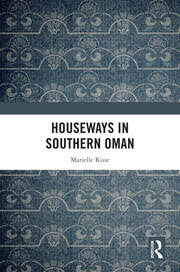
Houseways in Southern Oman by Marielle Risse
Essays and poetry by Marielle Risse have appeared in Emanations II-V and VII-IX.
Her new book is Houseways in Southern Oman. It follows her Foodways in Southern Oman (Routledge 2020) and Community and Autonomy in Southern Oman (Palgrave Macmillan 2019). Click the cover image to view a description of the new book:
Professor Risse (WEBSITE) teaches literature at Dhofar University in Salalah, Oman. Her areas of research are connecting Middle Eastern and Western writers and intercultural communication/competence. She is a fellow of the Royal Geographical Society. Her work has been published in The Chronicle of Higher Education, The Washington Post, Travel Culture (Praeger) and, most recently, the “Reader’s Guide” of Khadija al-Thahab’s Stories of My Grandmother (Sultan Qaboos Cultural Center).
Saturday, February 11, 2023

Friday, February 10, 2023
Thursday, February 9, 2023
Tuesday, February 7, 2023
Monday, February 6, 2023
Richard Kostelanetz on Intellectual and Cultural History
Writing on the subject of “Intellectual History” in The Dictionary of the Avant-Gardes, Richard Kostelanetz draws a distinction between “Cultural History” and “Intellectual History.”
Kostelanetz tells us that Cultural History “records the art and thought of one or another circumscribed groups.” Intellectual History is distinguished as “the best that is thought and thus most likely to be remembered on the largest stage.” The short entry concludes, “Most of this Dictionary aims to be Intellectual History” (209-210).
Earlier, in an article on “Cultural Wars,” Kostelanetz observes the term arose originally as a legitimate form of protest over injustices driven by race, geography and gender “(but never religion or age).” These protests, writes Kostelanetz, “distracted from the more profound, more historic, more continuing conflicts between the commercial and the non-commercial, between mediocrity and excellence, and between establishments and the avant-gardes” (100).
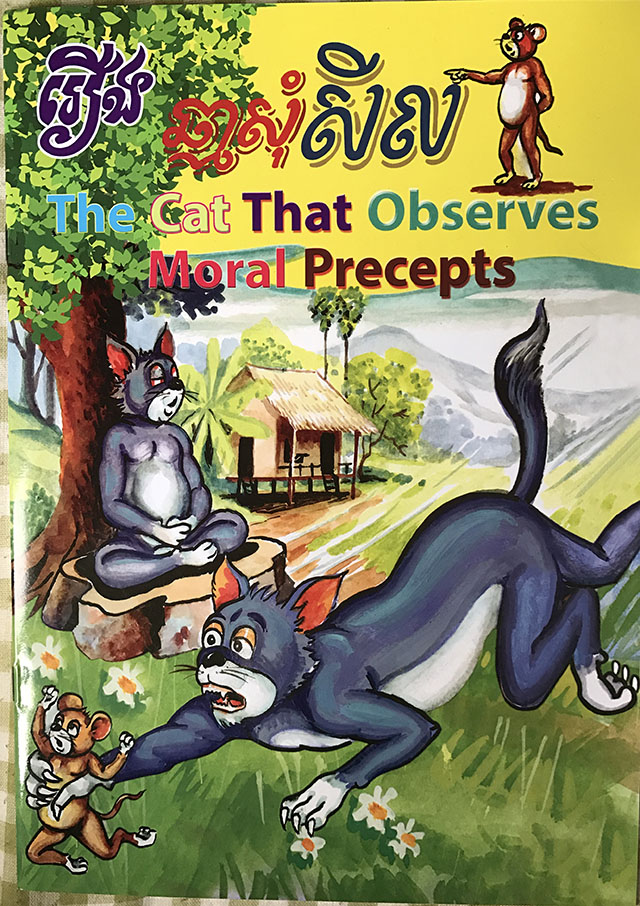
A tremendous resource. Click the cover image to view the Amazon description:

Sunday, February 5, 2023

Saturday, February 4, 2023
Michael Butterworth's Complete Poems 1965-2020 has been published. Also: Butterworth audio recording...
The following notice is from Space Cowboy books:
For more than fifty years Michael Butterworth, better known for his work as a
writer, editor and publisher, has also been a quiet unobtrusive voice in
poetry, with roots lying both in the small press poetry journals of the sixties
and seventies and in New Wave of Science Fiction. His work is distinguished as
much for the restless intelligence, wit and intimacy of his voice as a
determination, shown in many of these poems, to paint metaphorical pictures of
the perils we face due to our poor regard for the fragile biosphere in which we
live. In other poems, he finds, within the events of an ordinary life, scope
for the transcendent, and in still others his use of nonsense and absurdity
playfully captures the moment, puncturing the illusions of the self. Across his
work, elements are reiterated but endlessly transfigured –
The effect is at once familiar and yet profound, in language
that has the confessional qualities and simplicity of early influences such as
Sylvia Plath and the Beats, and the later influence of Zen poets such as
Ryōkan. Occasionally the writing is startlingly radical – a reminder of the
poet’s beginnings in the New Wave.
A collection such as this one from Space Cowboy Books is overdue, and Complete Poems: 1965-2020 brings to more deserving attention a less heard voice in modern poetry

Please click HERE for the hardback.
Please click HERE for the paperback.
Also available: a recording of Mr. Butterworth reading his poems, with music by Phog Masheeen, Julie Carpenter, Field Collapse, Jean-Paul Garnier & As Deviants Stagger.

Please click HERE.
Saturday, January 21, 2023
Highbrow Fluency (is Philosophy middlebrow?)
Philosophical
questions posed by philosophers are properly answered in traditions
with a "higher-level" of fluency than Philosophy allows.*
Wittgenstein
provides countless examples. Indeed, he is at his best when
illustrating his points with examples of credulous understanding, the
credulous use of language, confused language, and credulous questions
rooted in the misapprehension of language.
Consider these representative examples of highbrow fluency:
See
Jane Austen in Northanger Abbey. Begin with her gloss on Addison and
Steele. More broadly, regard heroine Catherine Moreland and her
struggles with the epistemology of sociology as she learns to deal with a
world full of deceptive scoundrels.
See Jane Austen on the subject of "Sense and Sensibility" in, well, Sense and Sensibility.
See
Christopher Marlowe on the subject of Renaissance studies and
intellectual nostalgia for Greece and Rome in Dr. Faustus. Then
compare Shakespeare in Hamlet, when Hamlet has the player recite the
poem about Priam and Hecuba; compare that to the respective passage in
Virgil; and then consider the meaning of Hamlet's failure...
See Dr. Johnson on "everything" in Rasselas.
See Hawthorne on the "individual vs. society" in The Scarlet-Letter.
See Hawthorne on human sexuality and love in The Scarlet-Letter.
See Hawthorne on epistemology in The Scarlet-Letter.
See Hawthorne on "the Good Old Cause and American political philosophy" in The Scarlet-Letter.
See Melville on "certainty" in The Confidence-Man.
See Melville on language and the epistemology of science in the "Cetology" chapter in Moby-Dick.
See Francis Bacon on the Idols of the Marketplace and the Idols of the Theatre.
See
Roger Bacon on the four sources of philosophical/clerical/institutional
ignorance [here they are: 1) Appeals to an unsuited authority. 2) The
undue influence of custom. 3) The opinions of the unlearned crowd. 4)
Displays of wisdom that simply cover up ignorance].
See St. Augustin on Cicero and Plato.
See Sir Philp Sydney on History, Philosophy and Poetry in his "Defense of Poesy".
See Rabelais on law, theology and medicine.
See Milton on freedom of speech.
See Milton on separation of church and state.
See Milton on the foundations of government.
See Milton on the anthropology of theology.
See Milton for a conceptual history of the comparative analysis of mythology and theology.
See Milton on the politics of church bureaucracy.
See
Milton on the subject of sexual ambiguity, sexual identity and
mortality, sexual activity and mortality, and the theological
"substance" and "purpose" of gender roles.
See Nabokov on academic culture in Lolita, Pale Fire, and Pnin.
See Nabokov on the misapprehension of language and philosophical/theological credulity in Pale Fire.
See Philip K. Dick for his "anatomy" of human empathy in Do Androids Dream of Electric Sheep?
See Philip K. Dick on technocracy, media and social control in The Penultimate Truth.
See Philip K. Dick on technocracy, drugs, consumerism and social control in The Three Stigmata of Palmer Eldritch.
See Orwell on politics and language in "Politics and the English Language".
See Lucian on Philosophers and schoolmen in Sale of Philosophies.
See Robert Burton on science, medicine, theology, and psychological disorder.
See Aristotle on Ethics.
See
Xenophon on education, economics, human nature... As well, contrast
his Dinner Party to Plato's Symposium. Who "sets the record straight"
regarding the subject of the latter?
See the Talmud.
See
Edgar Allan Poe on aesthetics (everything he has to say), on
Aristotle in "Melonta Tauta", on Arminianism in "The Black Cat", on love
in "Ligeia", on the analysis of cyphers in "The gold Bug", on Emerson
and "Transcendentalism" in his third review of Hawthorne, and on
blockheads in general (passim).
* We will elaborate possible distinctions between "philosophy" and "academic philosophy" on another occasion.
Friday, January 20, 2023
Two reviews of Ebi Robert's The Creed of the Oracles


Thursday, January 19, 2023
Michael Butterworth reads... And a new review
John Dutton's review of the forthcoming collection: please click HERE.
Michael Butterworth Complete Poems 1965-2020 is out February 3, 2023.
Sunday, January 8, 2023
Ebi Robert Interview
To view the Amazon sales page for Ebi Robert's The Creed of the Oracles, please click HERE.
Friday, December 30, 2022
Tonight...
Tessa B. Dick is appearing on Hyperspace with Solaris BlueRaven. 9:00 pm Pacific, 12:00 am Eastern.

By clicking the image you will be directed to the stream. Or:
Listen on your telephone: 667-930-9879
Hot Line: 702-425-9230
Subscribe to:
Posts (Atom)


