Friday, December 6, 2013

Arthur C. Clarke as Point of Departure for Comprehending the World Around Us

Arthur C. Clarke
In his essay on "Hazards of Prophecy: The Failure of Imagination," Arthur C. Clarke makes a shrewd anthropological observation when he points out that "any sufficiently advanced technology is indistinguishable from magic." 

Clarke's anthropology is spot-on. In these words he underscores a principle that can be applied to the analyses of any number of challenging phenomena.  Consider, for example, our difficulties understanding what politicians are doing--what they say, their actions, their motives, their goals, and so on. Rather than respond with frustration, we should keep in mind that our leaders exist at an intellectual level far above our own, and that, notwithstanding their excellence, we can uncover something approaching a full explanation through a simple application of Clarke's principle:

"Any sufficiently advanced decision made by a professional politician is indistinguishable from magic."


Thursday, December 5, 2013

A Highbrow Glance at Elkie Riches' Reclamation

I recently posted an Amazon review of Elkie Riches' novel Reclamation:
Elkie Riches' debut novel is an amazing tour de force bringing together rich story-telling and startling ideas, but it is also a work of sophisticated literary art. That is, hold-on! This book is not what you might think it is.

Sharply drawn in a brisk and vivid style, RECLAMATION begins as a science fiction novel with familiar (though fresh) New Age and Eco-feminist themes. The world has slipped into a historical phase called the "Turning" in which Nature has revolted against the human race--not so much because of the abuse of the environment as for humanity's lack of sympathy with the interweaving streams of reflexive consciousness that nature collectively represents. The conflict manifests as a struggle between human beings and animated shrubbery, strangely sentient animals, and less tangible shape-shifting entities that manifest themselves in whirlwinds of twigs, dust, blowing leaves, and (apparently) in the corpses of dead human beings. Civilization has crumbled, and what's left of the human race builds fortresses atop the ruins of the world's great capitals, and a strict military order is maintained to defend what's left of humanity from the flora and fauna that run wild. Specially trained (and thoroughly despised) intelligence gatherers of the Shaman Division are used to monitor the confusing intentions of the (un)natural order which effusively possess the shaman's minds. Meanwhile, faceless corporations orbit the earth in satellites directing the "reclamation" of earth from the enemy nature. But this is where the novel itself "turns" into something that is quite unexpected--and quite frightening. Riches' strangely vivid and energetic prose turns against the story itself, producing the effect of something that the present reader was at odds to come to terms with. At the risk of diminishing Riches' profound mythological performance that is better "felt" than described, RECLAMATION could be characterized as a prose poem about the interweaving boundaries between consciousness and reality. Readers of Philip K. Dick and Jorge Luis Borges will find themselves in familiar (and disturbing) territory. Imbedded in the conflict between humanity and nature is a deeper and more profound struggle that possess reality like the shape shifters that possess whirlwinds or the minds of the shamans--that is, the beliefs of living matter itself are struggling to shape themselves and identify what they are and what they--in some fleeting shamanic glimpse--mean to themselves. Yes, Love does survive the conflict, but does the human race, at least as we know it?
Reclamation can be purchased through Amazon HERE.  Kindle version HERE.

Elkie Riches


Tuesday, December 3, 2013

Tally-Ho, Cornelius! reviews on Amazon

My novel Tally-Ho, Cornelius! has received a number of favorable Amazon reviews.  I discovered this review today:
The Multiverse Finds Its Hero
by Samuel Sanders on November 9, 2013
Kids, this is not your average garden variety Jerry Cornelius story. In fact, I would go as far as to postulate that Carter Kaplan has penned the definitive Jerry Cornelius Origin Story.

The entire story revolves around the vainglorious Reverend Dr. Jeremiah Cornelius and his, at first glance, perfect life. All the supporting actors are here: Catherine, Francis, Oona. A revolutionary minister known for conciliating science and religion, the postmodern divine enjoys a celebrity status. He meets a strange and eloquent little boy claiming to be from Brazil.

Little does the postmodern divine know that Capricorn is in fact an immortal Lost Corsair in a last ditch attempt to save his corsairs from the singularity at the beginning of Time! The Lost Corsairs wait for their captain in their unfamiliar identities and struggle to cope in the laws of physics defying universe.

The majority of the book is like a gentle stream. You follow the postmodern divine on his daily doings. The longest chapter is a step by step tour guide from St John's to the Museum of Natural History, then another detailed guide of the reverend and the boy's wanderings inside the museum. Satirical, philosophical, nonsensical, this novel springs forth some heady subjects, including a scientific definition of Moorcock's Second Ether and what it really is.

Meanwhile, it all comes to head in a most interesting way. You end up not liking the pompous postmodern divine very much while you can't help but be impressed by him, but at the end of it all, you start feeling very sorry for him because the perfection he finds in himself and hopes to find reflected in others fails him. And you go away from it unsure about how you feel about it all, but want to brush up with another roundabout.

Kaplan pens his first novel with an unique and addictive style which keeps one enthralled despite the majority of it being composed of primarily mundane activities. If you are looking for something not run of the mill, or are just a big Jerry Cornelius fan like myself, this book is for you.

Read on!
More reviews HERE.

Monday, December 2, 2013

Michel Ciment on Stanley Kubrick

First, an interview. It is a minor thing, but I was immediately struck by Kubrick's voice, and my realization that in Dr. Strangelove Peter Sellers mimics Kubrick's voice when he portrays President Merkin Muffley.


Next, a short film in which Ciment explores Kubrick's interest in power elites. Two points I want to make:  Point 1) In one of the scenes at home, the daughter in Eyes Wide Shut is shown dressed in a white outfit with fairy wings--then at the end of the film in the toy store the daughter chooses a doll dressed in a white outfit with fairy wings.  Point 2) In addition to the theme of power elites and the byzantine process of figuring out their motives, Eyes Wide Shut highlights how women are socialized and explores the sociology (and the "deep" politics) of their various roles in our civilization.

Friday, November 29, 2013

Horace Jeffery Hodges Reads from The Bottomless Bottle of Beer

Professor Hodges recently read from his novella The Bottomless Bottle of Beer before an audience at Ewha Womans University in Seoul, South Korea.  A brief description of the reading as well as a neatly-produced video of Professor Hodges' understated (and quite charming) performance can be viewed on his blog Gypsy Scholar.

The Bottomless Bottle of Beer is available in a Kindle version by clicking HERE.  The story originally appeared in Emanations: Second Sight, which can be viewed HERE.

Professor Hodges, Master of Coquettish Understatement

Thursday, November 28, 2013

Wednesday, November 27, 2013

Tuesday, November 26, 2013

New Project Announcement

As Dario Rivarossa says in his blog today, International Authors is embarking on a new book project, perhaps our most ambitious to date: a contemporary translation of Torquato Tasso's Il Mondo Creato. The translation will be handled by Dante and C. S. Lewis scholar Salwa Khoddam, and Dario Rivarossa, whose English-language edition of Dante was a Fantasy Writer was published by International Authors.

In his announcement, Mr. Rivarossa describes the unusual characteristics of Tasso's poem:
Though based on Genesis 1, the poem in fact has no plot, no protagonists, no dialogues, no structure, sort of a stream of consciousness, or a movie made with scattered footage from documentaries. A surprising mix of descriptions and theories, theology and doubts, Renaissance culture/history (the Discovery of America) and biology, translations and autobiography, imagination and despair, and whatnot.
Watch this space for news as this exciting project develops.

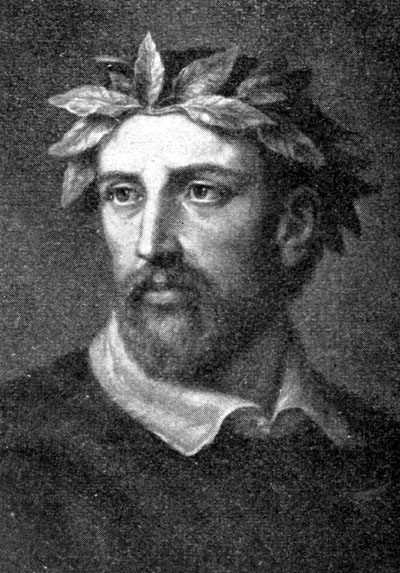
A depiction of Tasso from a German encyclopedia, 1905.

Monday, November 25, 2013

Monday Morning Affirmation


Eating fruits and vegetables and drinking lots of water are happy ways to say, "I LIKE MYSELF!"

Sunday, November 24, 2013

Underlying Secret of Highbrow Wisdom Revealed


Tomorrow is another day, but today is today...

Saturday, November 23, 2013

Further Discussion with the Gypsy Scholar

Considering yesterday's Highbrow post, an interesting parallel thread of comments has emerged on Professor Hodges' blog.  Please click HERE.

Friday, November 22, 2013

Theological Origins of Modernism?

My friend and International Authors colleague Horace Jeffery Hodges is currently writing about Christian antecedents to modern notions of liberty. As the Highbrow community as well as the readers of my books know, this is a subject that I have explored in my work in analytic philosophy, in my Afterword to the International Authors edition of The Scarlet Letter, and in my novel, Tally-Ho, Cornelius!  Actually, in the final scene of my Aristophanic comedy Diogenes, you will find it there, too.

Professor Hodges is appropriately skeptical of Christianity's record in the matter of modern liberty, as he reports in his recent blog entry,  Christianity and Liberty?   He concludes, "Christianity's record on freedom is . . . spotty in deed and spotty indeed . . ."   Very properly, Professor Hodges would like to see  "what brought about an interpretation of scripture conducive to liberty, democracy, and equality."  My initial response to him is that an answer to his question is offered as "a point of departure in the opening to Locke's Letter on Toleration, which is not only an instructive and fascinating essay, but is also a vehicle for enjoying Locke's engaging and pleasant personality."  I should add that the Letter is the classic formulation of what I understand to be the the foundation of modernism: the separation of church and state.

Let's hope Professor Hodges continues to reflect on this question, evokes his command of the history of religion and his knowledge of the Bible, and points us towards a bigger and more capable analysis.

Thursday, November 21, 2013

Support the WAH Center: Raising Funds for Building Maintenance

In the New York area?  Please consider the following invitation from Williamsburg Art and Historical Center director Terrance Lindall:

Updated Hours:
Saturday November 23, 2013 thru December 24, 2013
Sunday thru Friday: 12:00-6:00 p.m.
RAISING FUNDS FOR BUILDING MAINTENANCE

SALE INCLUDES FINE ART, Vintage Clothes, & Collectibles.

Featured items:  Pool table,  books, records, vintage band and other uniforms, African art, comic books, lamps, vintage clothing,  and bric-à-brac. 

Have tea in the new period room created by the HBO TV series Boardwalk Empire!

Plus for the readers, scholars and fine art collectors some special holiday gifts: postcards, books, giclee prints by the foremost living Paradise Lost illustrator Terrance Lindall, whose work is in the greatest Milton collections in the USA and abroad. 

Postcards and books and the Gold Scroll Giclee prints (paper version) can be purchased at the Art Center.
Giclee prints of the New Eden Series are by order only. Order New Eden Series by November 30 to arrive before December 24th:
"How can I live without thee, how forgoe
Thy sweet Converse and Love so dearly joyn'd,
To live again in these wilde Woods forlorn?
Should God create another Eve, and I
Another Rib afford, yet loss of thee
Would never from my heart; no no, I feel
The Link of Nature draw me: Flesh of Flesh,
Bone of my Bone thou art, and from thy State
Mine never shall be parted, bliss or woe." 
Book 9, Paradise Lost

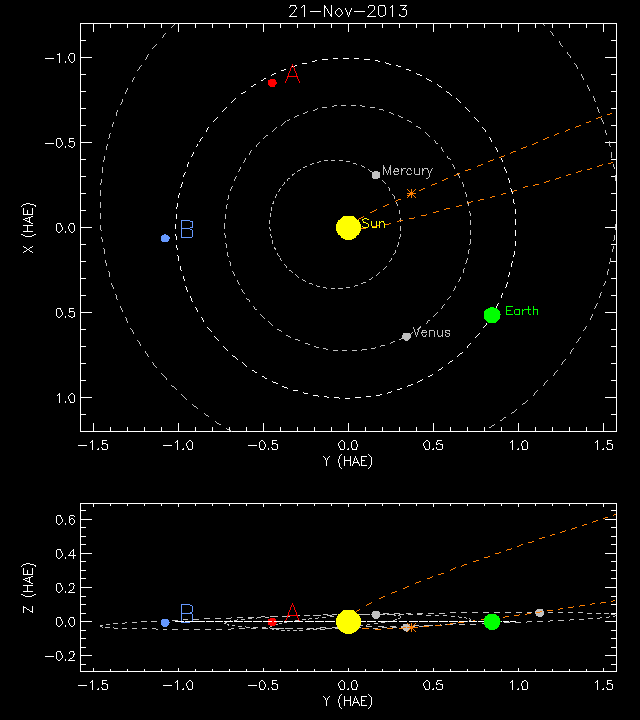
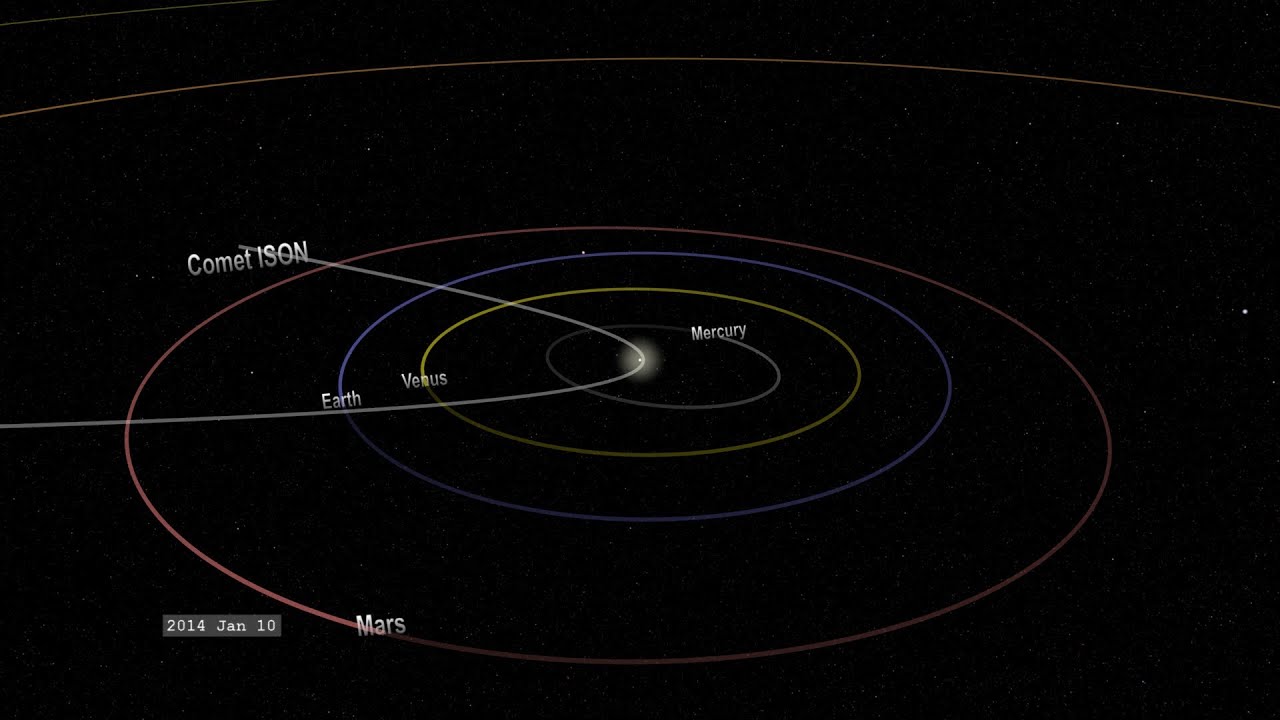
Comet ISON: 4D Viewer

Click HERE to enjoy a remarkable tool for observing ISON's path.

Comet ISON on November 21, 2013


Wednesday, November 20, 2013

What is a Lie?

1.0 The essence of an object is the unchanging element distinct through its series of appearances.

1.1 Alternatively, one could say the essence of an object is a changing element, varying and contingent upon each distinct appearance in a series. Essence varies with time, context, and perception. Ergo, essential truth is proved against the criteria of the context and time frame in which the utterance is perceived (as being true).

2.0 But remove the concept of "essence" and the formulation is upended. The truth of 2+2=4 is not contingent upon essence (or appearance).

2.1 2+2=4 is true because it is.

2.2 If you could somehow remove a thing's "essence," would that thing cease to exist?

2.21  "Look," I could say, holding up a pair of galoshes,  "Although these galoshes will fit over my shoes and will repel water, I have removed their essence, and therefore they are no longer galoshes."

2.22 Alternatively, I could hold up a pair of galoshes without mentioning their essence at all, and say, "These galoshes fit over my shoes and repel water."

2.23 Would adding the word "essence" or the concept of essence to this statement (or a statement like it) in any way change the fact that the galoshes fit over my shoes and repel water?

2.231  An important philosopher could say, "But fitting over your shoes and repelling water is the essence of your  galoshes!"  Rather isn't that simply what they do?

2.3  2+2=5 is false.

2.31 And if 2+2=5 is true, then it is a proposition of a political nature...

2.312 or a proposition of theoretical mathematics. 


Monday, November 18, 2013

This Afternoon: Ancient of Days

This afternoon I will be speaking with Tessa Dick on her program Ancient of Days. The show starts at 3 p.m. Pacific time (6 p.m. Eastern, 11 p.m. Greenwich).  Our subject will be International Authors.

To listen by phone or to call in with questions, dial (347) 324-3704.

Tessa Dick

Are Persons Brains? The Challenge of Crypto-Cartesianism - P. M. S. Hacker and Raymond Tallis

Raymond Tallis begins at  28:22.
Peter Hacker begins at 1:01:30.

Friday, November 15, 2013

Memo from Michael Butterworth

Last month, Michael Butterworth sent me his initial impressions of Emanations: Third Eye.  Here they are:

Sent: Tue, Oct 8, 2013 4:28 pm
Subject: Re: Emanations
Hi Carter,

Have now received E3 (bought 5 copies from amazon.com).

I find myself thrilled with it in all senses of the words. It is by far the best-looking of the three volumes, and another fat tome to boot stuffed with new and interesting work that probably excels the first two. It's no mean feat to achieve this level of excellence three times in a row.

Very impressed with the latest Bronson serial! I think your fiction writing gets better and better.. . I thought the latest installment of this zany and original serial had a highly inventive and enjoyable narrative, fresh to the senses and teasing to the intellect. 

Turning to the other pieces, Philip Murrary-Lawson's story has a fine way of subverting itself with humour that raised a smile more than once, Elkie Riches' story has the power of Moorcock's 'Dancers' series, Hrodevert Conall's strange piece I liked, Jeffrey Falla's I liked but could not understand (and must come back to!), Li Li's 'Summer Breeze' I thought was excellent for a new young writer, Leslie McMurtry's 'The Guest' well done though more conventional.

I very much enjoyed Gareth Jackson's two new pieces, which I hadn't read before. In terms of quality and ambition they could have come straight from the pages of New Worlds circa 1967-70. They read like collaborations between Sladek and Dr Christopher Evans, yet they speak with an entirely original voice. I thought the use of pseudonyms exactly right. I also thought your addition of the graphic, of a clay tablet inscribed with primitive writing, an inspired addition to 'An Abridge History'. It fit so well I thought initially that it must be Gareth's own choice of illustration, and I wondered how you had come by it. 

Your other 'found' illustrations scattered throughout the book all fit extremely well with their parent texts. I thought there were many good illustrations again, particular Kai Robb's and Dario's. We are so lucky to have them!

I enjoyed my first reading of the poems, though I need to come back to them to fully appreciate the many individual voices. It was a lot to take in. I loved the visual poetry, and Richard Kostelanetz's amusing 'Lovings'. I very much liked the inclusion of prose-poems, an undervalued art. 

I'm now excitedly looking forward to making my way through 'Themes'. So far I have read Marielle Risse's absorbing piece.

All in all, it is a great read that pushes the boundaries of imagination. We should all be very proud. 

Best wishes,
Michael
Well, it is most gratifying to receive an email like this.  Read the Phllip Murray-Lawson interview with Michael Butterworth here:  Part I  Part II

Also, please see the Call for Submissions for the next volume of Emanations by clicking HERE.

Thursday, November 14, 2013

New Potato Shoots: Time May be an Illusion

An editorial by Jacob Aron in New Scientist reports on new research (that is, new experimental modeling) in which an "Entangled Toy Universe Shows Time may be an Illusion."

Researchers sent "a pair of entangled photons along two separate paths. The photons start out polarised, or orientated, either horizontally or vertically, and the polarisation rotates as both photons pass though a quartz plate and on to a series of detectors." Somehow, and this is not clearly explained, the researchers established themselves (or something) as a "'super observer' that exists outside of the universe, and so measure[d] the quantum state of the system as a whole. From that vantage point, the state of both photons taken together is always the same, giving the appearance of a static universe."

At the conclusion of the editorial, Aron quotes one of the scientists:
"It's a visualisation of the phenomenon, it's not a proof," Genovese says of the experiment. "You should look to the universe itself for that."
Now, consider the following from the on-line Stanford Encyclopedia of Philosophy article on Wittgenstein's Philosophy of Mathematics: 
...apparent propositions are pseudo-propositions of various types and . . . all other uses of ‘true’ and ‘truth’ deviate markedly from the truth-by-correspondence (or agreement) that contingent propositions have in relation to reality. Thus, from the Tractatus to at least 1944, Wittgenstein maintains that “mathematical propositions” are not real propositions and that “mathematical truth” is essentially non-referential and purely syntactical in nature. On Wittgenstein's view, we invent mathematical calculi and we expand mathematics by calculation and proof, and though we learn from a proof that a theorem can be derived from axioms by means of certain rules in a particular way, it is not the case that this proof-path pre-exists our construction of it.
Highlight this:

"... 'mathematical propositions' are not real propositions and . . . 'mathematical truth' is essentially non-referential and purely syntactical in nature..."

Next, substitute the phrase/notion "theoretical physics" for "mathematical" and you get this:

"... the propositions of theoretical physics are not real propositions and theoretical 'truth' in physics is essentially non-referential and purely syntactical in nature..."
 

If you read through the Stanford  article you can trace Wittgenstein's thinking over the years as he drills down into this issue, which concludes with some remarks from Wittgenstein's Philosophical Grammar. The second aphorism is especially amusing, and moreover possesses relevance for creative artists who like to toy with their emanations :
What will distinguish the mathematicians of the future from those of today will really be a greater sensitivity, and that will—as it were—prune mathematics; since people will then be more intent on absolute clarity than on the discovery of new games.
Philosophical clarity will have the same effect on the growth of mathematics as sunlight has on the growth of potato shoots. (In a dark cellar they grow yards long.)
 
A mathematician is bound to be horrified by my mathematical comments, since he has always been trained to avoid indulging in thoughts and doubts of the kind I develop. He has learned to regard them as something contemptible and… he has acquired a revulsion from them as infantile. That is to say, I trot out all the problems that a child learning arithmetic, etc., finds difficult, the problems that education represses without solving. I say to those repressed doubts: you are quite correct, go on asking, demand clarification! (PG 381, 1932)