Sunday, August 25, 2019

Fritz von Opel and his rocket car, 1928 (with Haiku encomium)


bored people gather
nozzles clustered in the tail
it has come to this

Saturday, August 24, 2019

A Labyrinth in the City of Truth


From a series of engravings depicting imaginary utopias and dystopias in The City of Truth, or, Ethics (1609), Bartolomeo Del Bene’s poetic adaptation of Aristotle’s Nichomachean Ethics.  Please click HERE for more images from this volume.

Friday, August 23, 2019

“I’ll teach you differences.”

Wittgenstein suggested an epigraph for Philosophical Investigations could be a line from King Lear: “I’ll teach you differences.”

Elsewhere, he writes:
The older I grow the more I realize how terribly difficult it is for people to understand each other, and I think that what misleads one is the fact that they all look so much like each other. If some people looked like elephants and others like cats, or fish, one wouldn’t expect them to understand each other and things would look much more like what they really are. 


Source.

Thursday, August 22, 2019

More "Milton in Outer Space"

Peter Dizzoza introduces and preforms the piece:


Milton has been called the first poet of Space. Previous literary excursions used the underworld as the "remote sphere" that protagonists visited.  If I remember correctly, in one of his dialogues the satirist Lucian has his protagonist fly to the moon.

Wednesday, August 14, 2019

Reviewing the Quinque viae, concluding with a celebratory haiku

It has been a slow day here at the Highbrow Commonwealth, so we might as well review St. Thomas Aquinas’s five arguments for the existence of God:

Prima Via: The Argument from Change: Change is everywhere. Someone causes it---so there must be a God like Aristotle’s “Unmoved Mover.”

Secunda Via: The Argument form Causation: Who causes causes? Is there a first cause, itself uncaused? There is. God is the original Uncaused Cause.

Tertia Via: The Argument from Contingency: How do we account for contingency in nature? Only by a Necessary Being beyond contingency.

Quarta Via: The Argument from Degrees of Excellence: We notice degrees of excellence in nature. This implies the notion of perfection, which in turn implies what we might call a Perfect Being.

Quinta Via: The Argument form Harmony: Everywhere we look is “adaptation” or “accord.” Fish need to swim so they have fins and tails. Dogs need to chew bones so they have strong teeth. These are evidence of design—the manifestation (evidence/existence) of an Intelligence that organizes things.

Francisco de Zurbarán, The Apotheosis of Saint Thomas Aquinas (1631)


St. Thomas expounds
Church Doctors review with care
This is a nice day

(Attribution: my summary of the Quinque viae is from old notes, and I take they had been borrowed and paraphrased from various sources, long since forgotten.)

Saturday, August 10, 2019

Friday, August 9, 2019

Heroic advent of technocracy glimpsed from a rugged armchair, etc.

Raymond Massey in Things To Come... Korda and Menzies’ film of the H.G. Wells novel

Tuesday, August 6, 2019

Philosophical Terminology, Conceptual Abstraction, and Confused Understanding


From "Dance Curves: On the Dances of Palucca,”
Wassily Kandinsky (1926)


Kandinsky's dynamic drawings are wonderfully pleasing. They underscore the beauty of the original subject as well as represent impressions that move us emotionally. 

They also elegantly illustrate the principle of conceptual abstraction.

Many philosophical terms and concepts are similarly abstractions. An erudite fellow in a lecture hall can equivocate endlessly about "absolutism" and "relativism", "freedom" and "determinism", but he is not talking about the real world. He is talking about abstractions--he is talking about mere "sketches" that represent only "parts" of the real world.

Compare two-dimensional cardboard stage scenery in a theater, and picture the erudite fellow acting as though these cut-outs aren't flat pieces of scenery, but are actual buildings, real trees, three-dimensional hills hundreds of feet tall, or what have you. The lecturer can deploy all sorts of learned "examples" and "statements" (that is,
effervescent terminology and exhilarating traces of cogitation concocted by other philosophers) to create the impression that these are important concepts, and he can speak and act as though his fluently equivocating upon these abstractions is discussing the real world, but the fact remains the lecturer is merely discussing abstractions--fanciful sketches that suggest or thinly evoke reality, but are actually illusions, wispy figments, evanescent nebulae, and fading imitations.

For further elaboration, see Bacon's remarks on the Idols of the Theatre in the
Novum Organum, or Melville's dilation upon the images of whales in chapters 55, 56 & 57 of Moby-Dick.

Wednesday, July 31, 2019

Peter Dizozza presents: Eye on the Space Race

Peter will perform "Milton in Outer Space" (see Emanations: Chorus Pleiades) to open his August 4th Cabaret Show at Pangea. The show is called Eye on the Space Race, next Sunday at 7. New York City. 

Please click HERE for tickets.


Saturday, July 27, 2019

Ebi Robert receives awards in Nigeria

Emanations contributor Ebi Robert has received a national award for contributing to the poetry renaissance in Nigeria, and a Certificate of Appreciation from the President of Poets In Nigeria

 The Award of Recognition was presented to Mr. Robert for the establishing the Poets In Nigeria Yenagoa Connect Centre, which is key to advancing a poetry renaissance in Nigeria.

The Certificate of Appreciation was presented for the successful hosting of the Nigerian Students Poetry Prize, 2019 in Bayelsa State, as Secretary of the Local Organizing Committee.

These awards came just after Mr. Robert received the award of Human Rights Defender by the Legal Aid Council of Nigeria, and the Distinguished Service Award from Educare as a jury member of the Essay Competition in commemoration of World Peace Day. 


Ebi Robert is a poet, playwright and short story writer. He is a Barrister and Solicitor of the Supreme Court of Nigeria. He was a Research Assistant with the Federal High Court, Nigeria. He currently works as a Co-Editor with The Nigeria Lawyer (TNL), and serves as the General-Secretary of the Association of Nigerian Authors, and Lead-Rep of Poets In Nigeria, Yenagoa Connect Centre. He is also the An Administrator of World Poet Institute, Bayelsa State Chapter. Ebi Robert is a member of the International Authors Board of Editorial Advisors.

Saturday, July 20, 2019

Coming soon...

Next month, there is a new book from William Weiss, who collaborated with Gareth Jackson on Escape Trajectories.

The new book--68 Cantos--is a carefully edited "cut-up" that William Weiss made with two of Michael Butterworth's science fiction novels, published some decades ago. The resulting production reads like a novel--a very strange novel. It is more properly characterized as a prose poem. It is very well done, and it should be available the first week of August.

Tuesday, July 16, 2019

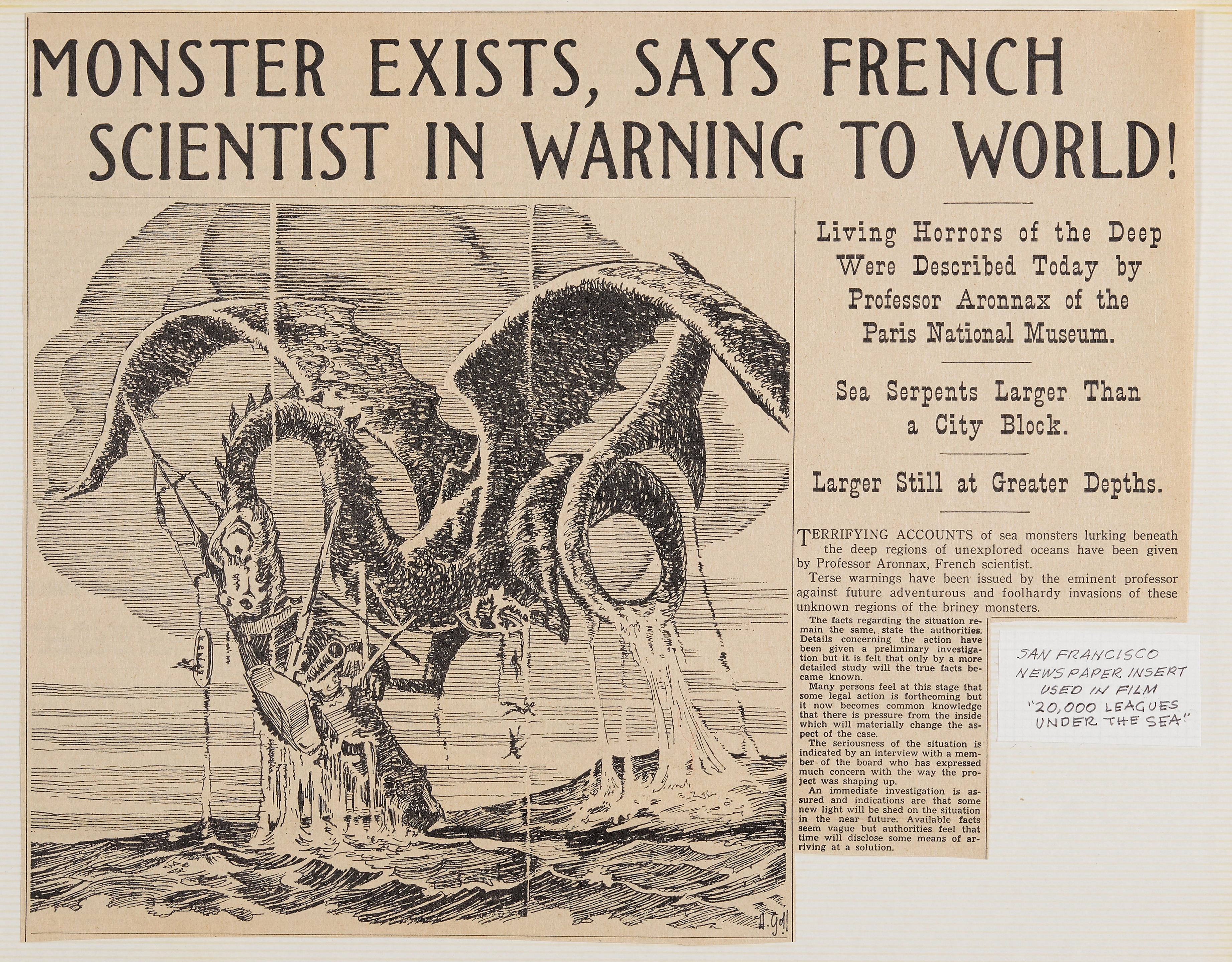
Confirmation from Professor Aronnax


Hard to make out?  Click HERE for a larger version.

Monday, July 15, 2019

Questions in Ethics

1. The film A Clockwork Orange presents us with difficult questions concerning freedom of choice, the politics of social control, the nature of justice, and the nature of good and evil. Describe how the film presents these themes, and resolve your understanding by reflecting upon them in a clear and organized fashion. As the film shows, these issues are shot through with paradox, contradiction and irony. Can we hope to come to some sort of conclusion about them?

2. Technocracy and moral philosophy: consider the relationship between normative ethics (or prescriptive moral philosophy) and technocracy.  With this relationship in mind, explain how analytic philosophy (or meta-ethics) critiques moral philosophy.


Sunday, July 14, 2019

Dr. Jones Denied Tenure


Please click HERE to view the memorandum from the department chairman.

Saturday, July 13, 2019